
I’m back in Istanbul after a long time. During this time, I traveled to various villages in Anatolia and witnessed the values of the Turkish villager. I’m very happy about this. I believe that the heart of the Turkish villager holds fundamental universal values that are essential for discovering our purpose in life, and I want to share this with you.
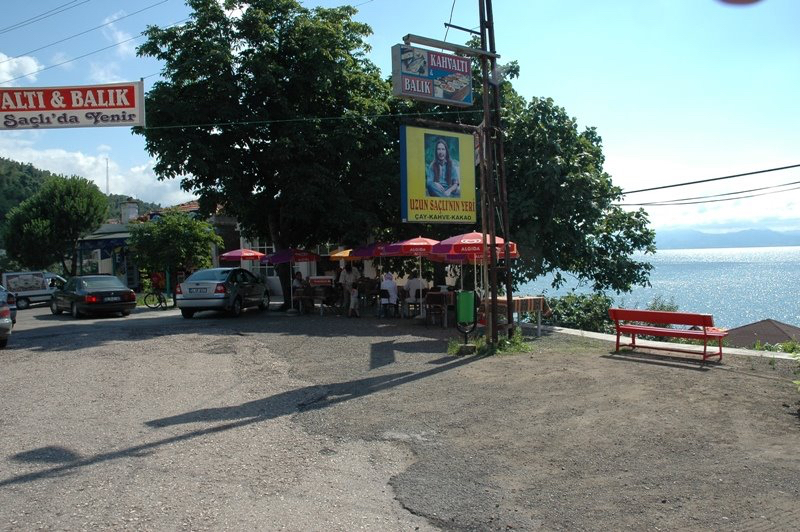
On the last day of my travel project, I had a conversation with Uncle Musa in Akkuş village, Ordu district, about the importance of values. Uncle Musa, who is around 80 years old but quite energetic and fit, made me postpone my return so I could get to know him a little better. The next day, we met again. We set off together towards Uzun Saçlı’s Place in Perşembe district. We arrived at a tea house with a sea view in the Medreseönü area. The tablecloths were old-fashioned. After a long wait, we began to sip our tea, brewed with oak wood and hazelnut shells. I wanted to ask Uncle Musa a question.
“You attended a village school. Then you worked as an engineer in Europe. In Istanbul, you provide consultancy services to major brands in your field. However, you spend almost the entire year in your village. I’m curious to know what kind of comfort zone you see between city life and village life.”
Uncle Musa, with his bright blue eyes, pointed to the people chatting and reading at the other tables. “You know,” he said, “when you mentioned comfort zones, I realized there was actually an important reason why I invited you here.”
“What is that ‘why’?” I asked, smiling.
“Are you aware of the silence, tranquility, and respect in this place?” he continued. “While people talk to each other, we only hear the soothing clinking of teaspoons.”
Uncle Musa’s observation opened many doors in my mind. Even though all the tables were full and people were standing, Uncle Musa and I could hear each other clearly without needing a hearing aid. This time, he asked me a question.
“In Istanbul, a city of over five thousand square kilometers, how many cafes, tea gardens, or places with sea views like this can you name?” I thought about it, and a place like “The Long-Haired Woman’s Place” didn’t come to mind.
“Honestly, I can’t list many, Uncle Musa,” I said. “Besides, if you’re a non-smoker like me, in places like this, let alone chatting or reading, you might even need an oxygen mask to breathe. Especially if you have a baby or a family with children, you often don’t have the right to breathe clean air. In fact, if you try to claim those rights, you might get a good beating,” I added.
This time, Uncle Musa smiled at me and continued.
“Mr. Uğur, I think we could give hundreds of similar examples in city life. I believe our society has always been stuck in an indifferent, rote-learning family and education system. The significant increase in the number of people who are unaware of their own and each other’s healthy living limits saddens me. What do you think?”
“That’s right, I think the same way you do. We’re here together, talking for hours. We’re trying to transform knowledge into something sacred by sharing it within our own sphere of influence,” I said, and taking Professor Dr. Engin Gençtan’s books out of my bag, I piled them on the table. I took a sip of my tea and continued.
“Uncle Musa, I had a young friend named Bilge, whom I loved very much, studying at Istanbul University. In fact, I sincerely wish he was there on this trip. I’m sure; It would bring great awareness to our conversations. At first, I thought he was a psychology student because he did not specify the department he was studying in. He had such a deep and strong consciousness; Since the day we met, we have spent time with each other and chatted at every opportunity. As our sincerity progressed, life-related issues also deepened. We looked forward to the days to talk and get together. I feel lucky for every discovery we make with him, both under the roof of my house and in the tea gardens. As our friendship progressed over time, we began to realize something. There were people around Bilge who loved him very much and valued him greatly, but Bilge secretly despised these people and had a secret anger towards them due to feelings he could not yet discover the reason for. He didn’t even realize that he wasn’t aware of this situation. Until I told him that I wanted to share with him what I saw in Bilge’s inner world. We created a long-term conversation on this subject. Bilge shared with me that he lives with intense feelings of inadequacy, that he feels like he is being mocked even when he is appreciated for a positive quality, and that people constantly test him to see if Bilge is empty or full. In fact, in this conversation, we made a very important discovery about living freely in the society we live in. I think my millions of young friends like Bilge, who have great potential, are not aware of their intentions in an indifferent, rote-oriented family and education system. The beautiful people of my country are experiencing the ongoing echoes of these and similar emotions in their inner worlds. That’s why I say; “There is so much to share.”
The sky had slowly darkened and grown quite cold. After learning the secret of Long-Haired Man’s unique tea, made in a copper cauldron with ice-cold spring water, we left Medreseönü with Uncle Musa.
Thank you for taking the time to read this.
With love and respect.
Ugur Ugural (November 9, 2016)
Acknowledgement Note:
All transportation and accommodation for this trip project were provided by a company with a chain of branches in Türkiye. The gentleman who owns the company is a childhood friend of Uncle Ozan and Aunt Saadet, whom I met last summer in Yalıkavak village. I would like to express my gratitude to him and his wonderful team who wholeheartedly dedicated themselves to this project. I would also like to thank Uncle Ozan and Aunt Saadet for not leaving me alone on this trip and giving me the chance to benefit from their vast life experiences. However, with tears in my eyes, I cannot find the words to express it. I am grateful that the values of the Turkish villager are like the sky, they never disappear.


