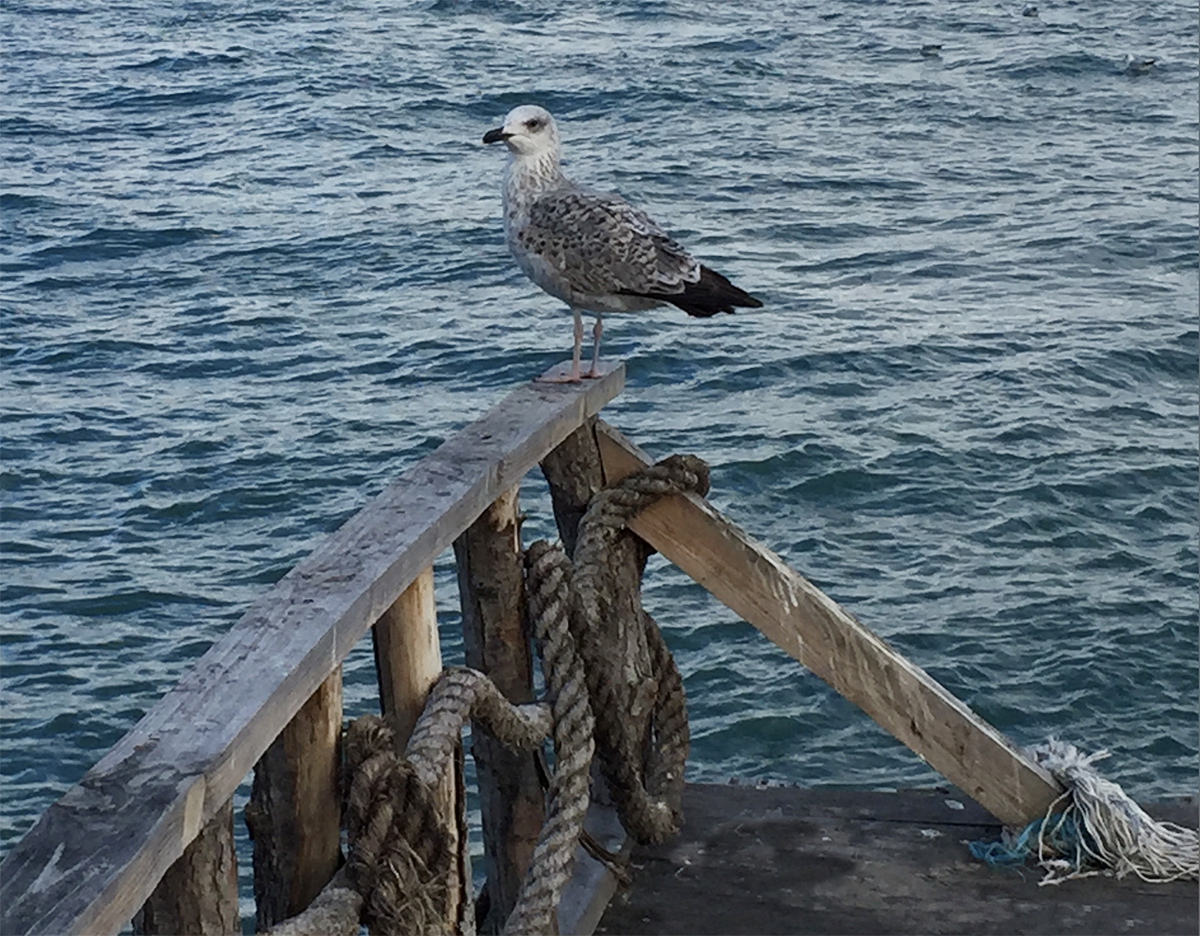
It was a warm, drizzly Istanbul morning on the Tarabya coast, and my wife Çiğdem and I were at a Sunday breakfast hosted by the businesswomen’s association. As Çiğdem finished speaking, my eyes fell on the table opposite us. There were six adults and three children. A father was trying to feed his seven-year-old son cheese from his plate with a knife and fork. Meanwhile, the child was looking out the large window at the seagulls and at the bread drying on the buoy… She’s observing the familiar cormorants. This time, the mother intervenes, scolding the child for not having breakfast. In return, she gets an olive thrown in her face. The father insists again. The child somehow manages to escape and goes to the window. The mother and father must be in a hurry; together they cover the child’s mouth. The little boy gets angry and quickly throws his cell phone onto the table. The mother shouts, “May God punish you, you’ve disgraced us in front of everyone!” Unable to control her anger, the woman squeezes and twists the child’s frail arm with her thumb and index finger. After a moment of silence, the child begins to cry in pain. He leans his head against the radiator, and for hours no one pays attention to the child.
My heart fills with sadness and sorrow at the rebellion of a child whose existence seems to be trapped. I think it’s very important for a person to be aware of the story behind their anger and to be able to answer the question, “Who am I?” Especially for parents.
A person who cannot discover the story of their own anger eventually loses self-recognition. They may not even realize they are someone else. This lack of awareness can lead to anger accompanied by sorrow and unhappiness, even resulting in a lack of self-love. Slowly but surely, you begin to become angry at yourself.
We are surrounded by anger so much in our families, at school, at university, at work, in traffic. And we don’t even realize it. In this environment of anger, there’s the issue of “power” and “who will intimidate whom.”
Your thoughts and observations on this matter are very important for our future. Thank you in advance for sharing, and I send my respects and regards.
Thank you for taking the time to read this.
With love and respect.
Uğur Uğural